
Weekend Reads (June 20): Boards of Canada, Gene Shalit (RIP), “Doctor Strange,” Biblical Plagiarism
Recommended weekend reading material for June 20, 2026.

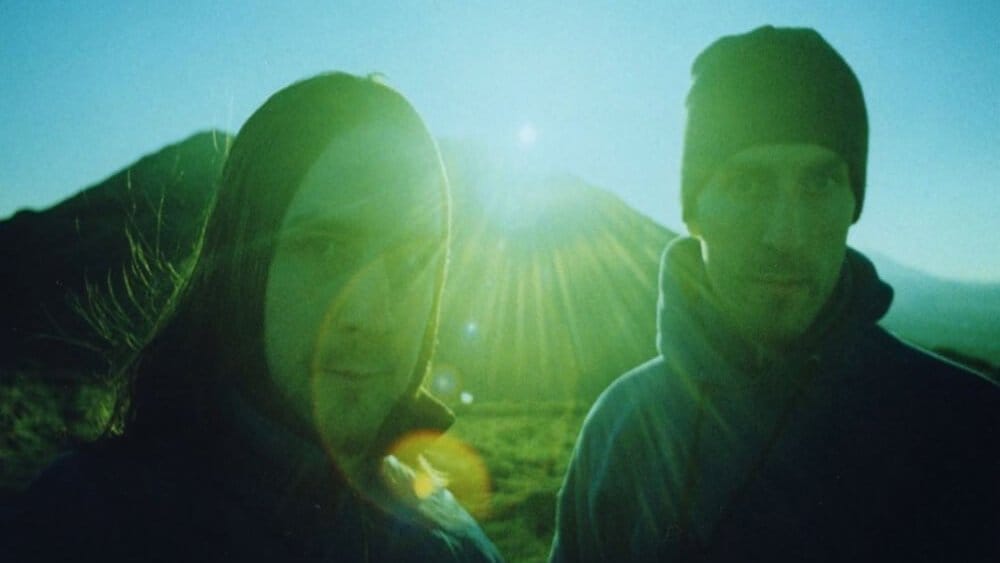
Last month, Boards of Canada released Inferno, their first album in thirteen years, and Simon Reynolds dives deep into the mystery surrounding the duo’s celebrated electronic music.
Although often positioned alongside Warp labelmates like Aphex Twin and Autechre as one of the three giants of electronica, the group have more in common with esoteric postpunk and industrial outfits like Devo, Coil, Nine Inch Nails, and Nurse With Wound, or with shoegaze pioneers like Cocteau Twins and My Bloody Valentine. Boards of Canada records are exercises in world-building: Sandison and Eoin are dreamscape gardeners who dissolve the boundary between musician and magician. The brothers have talked about their belief that music involves “powers… that are almost supernatural… You actually manipulate people with music, and that is definitely what we are trying to do.” Fans and critics alike testify to their music’s uncanny capacity for triggering buried memories. As unsettling as it is therapeutic, their music seems to reach back into your personal prehistory and part the mists of time.
Related: If you’re a paying subscriber, then be sure to check out this month’s podcast episode, which spotlights my favorite song from Inferno.
Pitchfork highlights the growing confusion over the Grammys “Best New Artist” category.
Few Grammys categories garner more antipathy than Best New Artist, where already-established acts frequently receive the coveted nomination long after their respective breakout albums. Infamous examples include Phoebe Bridgers (2020 nominee, three years after Stranger in the Alps), Kaytranada (2021 nominee, five years after 99.9%) and Japanese Breakfast (2022 nominee, six years after Psychopomp). Having heard the criticisms, the Recording Academy is finally switching up the rules… by increasing the number of times an act may submit themselves for BNA from three to four. If you’re wondering how this solves the original issue, that makes two of us.
Listen, we all know that AI companies have stolen art — books, music, etc., — in order to train their LLMs. And now we have proof: millions of copyrighted songs have been used, without permission or compensation, by AI music generators like Suno.
As part of my series of investigations into AI training data, I recently discovered four giant datasets of songs that are being shared within the AI-development community. One has 12 million tracks. Another has 9 million. The two smaller datasets each have more than 100,000. They include hits from major pop artists such as Bad Bunny, Nirvana, Taylor Swift, Billie Eilish, Pearl Jam, Elvis Costello, Sheryl Crow, and the Beatles. (The New Radicals’ “You Get What You Give” is in two of the datasets.) Jazz artists such as Miles Davis, John Zorn, and Vijay Iyer are featured, as are classical composers and tens of thousands of minor artists across genres. The 12-million-track dataset, on its own, would take 91 years to listen to.
Related: AI music generators like Suno represent an empty and solipsistic approach to art. “I do sometimes wonder why AI companies and their supporters delight in imagining a future that seems so dehumanizing. Perhaps all they care about really is the insane amount of wealth that currently resides in the AI sphere, because once you strip that away, you’re left with something pretty hollow and dispiriting.”
Diego Martín Lafuente has penned a thoughtful, if somewhat dispiriting, essay about the evolution of technology, and the impact of AI on the World Wide Web.
Every generation of computing believes the interface it loves will last forever. It never does. I saw information move from floppy disks to BBSs, from BBSs to the Web, from the Web to Flash, from Flash back to open standards, from websites to mobile apps, and now from search engines to AI chat interfaces. The Web will not vanish overnight, but the Web as we know it, the open place where people search, click, read, browse, publish, and discover, is already being replaced by something more convenient, more centralized, and much harder to escape.
Via TLDR Dev.
Movie critic Gene Shalit, instantly recognizable with his giant mustache, died last week at the remarkable age of 100.
He stood out from the broadcast television crowd with his colorful bowties and puffy hair. He often studded his reviews in the “TODAY” show “Critics Corner” with puns and other cheeky turns of phrase, endearing him to millions of viewers.
“‘The Silence of the Lambs’ may be all wool and a yard wide, but it makes a terrific yarn,” he said in his review of the 1991 horror classic, which won best picture at the Academy Awards the following year.
Steven D. Greydanus makes his case for 2016’s Doctor Strange being the best MCU movie.
Cinematically, above all, Doctor Strange is the only MCU movie that develops its own visual language for action scenes and other set pieces, so that it doesn’t look like every other MCU movie, or like any other superhero movie. Not that it has no precedents or inspirations. Most obviously, Doctor Strange draws on The Matrix and Inception (there are also moments that remind me of Gravity, Interstellar, and Labyrinth) while also going beyond its influences with a kaleidoscopic approach unlike anything I’ve seen in any other action movie.
I’m inclined to agree. As I wrote in my Doctor Strange review, “leave it to a big budget Hollywood superhero movie to create a poignant and powerful reminder that there’s more to the world than what we can see.”
Elon Musk became the world’s first trillionaire this month, but TC Sottek argues that Musk’s ultimate legacy will be far, far darker than just amassing insane amounts of wealth.
Elon Musk’s SpaceX IPO will probably make him the richest person to ever walk the planet. And while his mountain of horrible personal conduct could fill multiple books, one fact in particular stands out: A year ago, Musk’s actions directly led to the deaths of hundreds of thousands of people. He did it knowingly. And, worse — gleefully.
An Australian non-profit is installing a giant structure designed to contain data chronicling humanity’s environmental destruction. However, such a structure may not be necessary.
Whether the device will actually prove useful remains an open question. There is already an immense wealth of free, open-source data on climate breakdown available to anyone who wants to access it, and there’s really no reason to assume it won’t be accessible to future generations. From an advocacy standpoint, it’s possible that the box’s installation could reinvigorate some interest in the climate crisis. That is, until the news cycle turns over again.
A popular translation of the Bible has been accused of plagiarism.
[David Fish] started looking into the Bible translation after receiving a lead from a British Pentecostal minister who found basic errors in its Greek translations. Fish, suspecting that the translator didn’t know the original biblical languages, began to examine unusual word choices in the Passion Bible.
He found scores of verses where the Passion uses phrases that appear in popular paraphrases such as Eugene Peterson’s The Message but in no other English version. He’s also found many footnotes claiming to have discovered a nuance in the Aramaic that match, word for word, the observations of an eccentric independent scholar.
The Passion Bible’s lead translator has a history of dismissing any criticism as “cancel culture.”
The big news is Donald Trump’s recently signed agreement with Iran, which brings an end to his misguided war. But Mike Masnick explains why it’s actually a horrible surrender.
The final accounting: Trump tore up the JCPOA, which he called “one of the most incompetent deals ever made.” He started an illegal war. He drew down US military stockpiles, lost over a dozen American soldiers, and killed Iranian civilians — including a school full of young girls. And he came away with a memorandum of understanding that expires in 60 days, leaving Iran with everything it had before the war started, plus full knowledge of exactly how hard Trump will push before he folds.
Related: Adam Kinzinger on the Republican Party’s destructive tendencies, and the legacy they leave behind. “When the loudest voices in a party spend years rewarding the people who blow things up and punishing the people who try to build things, you eventually get a president who only knows how to [blow] things up.”
From the Blog
One of my favorite music labels, Huntington Beach’s very own Velvet Blue Music, turns 30 this month.
A 30-year run for an indie label seems downright miraculous in today’s music climate, and VBM’s ongoing success is a testament to both [Jeff] Cloud’s independent spirit and ear for interesting music, as well as the community that’s sprouted up around the label. (More than a few VBM artists have guested on each other’s albums.) So congratulations to Cloud and the VBM crew, and here’s to many more years of indie music par excellence.
VBM has put out music by some of my favorite artists, including Starflyer 59, Ronnie Martin, and Fine China.
This post is available to everyone (so feel free to share it). However, paying subscribers also get access to exclusives including playlists, podcasts, and sneak previews. If you’d like to receive those exclusives — and support my writing on Opus — then become a paid subscriber today for just $5/month or $50/year.