
Weekend Reads (February 28): RPGs, the Rock & Roll Hall of Fame, Horror Movie Posters, AI Worship Music
Recommended weekend reading material for February 28, 2026.

If you’re currently not a paying subscriber, I’m running a special offer during the month of February. Subscribe today and save 50% on the first 12 months of your subscription.
Every week, I compile a list of articles in order to give subscribers like you something interesting and thought-provoking to read over the weekend.
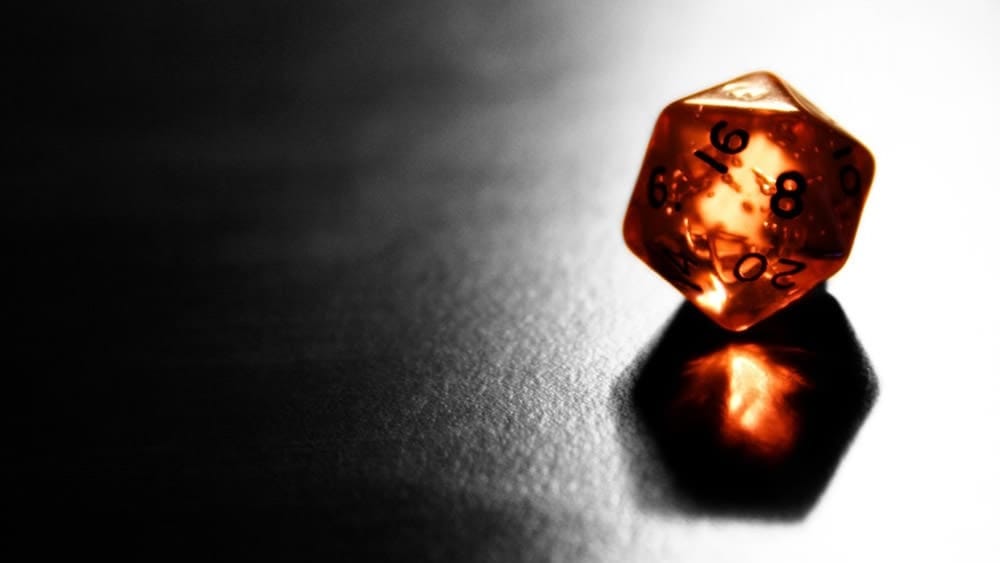
Although Dungeons & Dragons has seen a recent rise in competition from games like Daggerheart, Pathfinder, and Shadowdark, it remains the world’s most popular RPG. Except in Japan, that is, where Sword World reigns supreme. Timothy Linward recently interviewed the husband-and-wife duo who are working to bring Sword World to the West.
The pair had been working on the manuscript during the morning before I called them, Ai leading on the translation, and Shawn assisting with localization. “It’s really challenging!” Ai says with a laugh. “It’s like the worst aspects of translating a novel and a technical manual just combined into one”, Shawn says, “Because you need all of the flavor and the lore and the things that make it interesting from translating a novel, but you also need the specificity that comes with a technical translation”.
What does “substance” mean within the hip-hop community? A recent controversy highlights the never-ending discussion.
On paper, I understand how people prop this idea up as the last word on substantive hip-hop. We should want to platform artists who instill good values, speak out against the encroachment of ICE and the genocides happening in Gaza, Sudan, Tigray, and Congo. But artists don’t need to aim their lens at the entire world to find depth; meaningful rap can be plumbed from within. That isn’t to say that the personal automatically makes for engaging art, either. For example, J. Cole has devoted much of his career to affixing his story to an outline of his rap heroes, which has led to superficial showings of depth, meaning, and worldbuilding posturing as soulful everyman rap. I tend to gravitate toward rappers with more confidence in their own style, who can balance a passion for craft with a mix of the personal and political. At his peak, Lil Wayne was unmatched at this. Say what you will about the person he’s become now — claiming racism’s been solved because he’s a millionaire who takes pardons from President Trump — but he was once as capable of filling mixtapes with wild metaphors and similes over jacked beats as he was at getting to the root of his personhood with songs like “Mrs. Officer” or “I Miss My Dawgs.”
This sort of discussion isn’t limited to hip-hop, of course. Back in the day, my friends and I had many discussions concerning which indie and alternative artists were “authentic” and the “real deal,” and which ones were “posers” and “sell outs.”
Stephen Thomas Erlewine considers the 2026 nominees for the Rock & Roll Hall of Fame, which includes The Black Crowes, Jeff Buckley, Mariah Carey, Iron Maiden, and Joy Division/New Order.
These 17 nominees are evidence that the “youth culture” that’s the lifeblood of the Hall is no longer strictly defined by guitar groups, a transition that is probably inevitable but feels a bit strange in practice. Maybe the weirdness is due to the fact that there are still a lot of great guitar-based bands that should get at least one shot at the main ballot, particularly when Iron Maiden gets a third bite at the apple. I agree with the anonymous voter in this Vulture article: the Monkees should’ve made the cut.
Norman Records highlights some underrated albums that came out in the ’00s.
On top of the internet breaking everything, the 00s was also the decade when various other questionable things rose up. “Indie sleaze” became a thing, for example, but for every bunch of coke-ego Libertines clones there were artists making music that either wasn’t appreciated at the time, wasn’t appreciated later, or wasn’t appreciated at all. It was the decade when it became acceptable to enjoy shoegaze again, a time when hip-hop took some alarming left turns, an era when long-running eccentrics added to the sense of “anything goes now”. So let’s look back on a time when you could still openly smoke in the office, and pick out a bunch of records that deserve a little more love.
This list includes some real gems, like cLOUDDEAD and Beth Gibbons & Rustin Man’s collaboration. But it also includes several albums that have shot to the top of my “to listen” watch.
Natalie Fear laments the lack of originality in modern horror movie posters.
It seems that with each new horror release, there’s a poster following the same formulaic pattern. Red and black colour palette, simple but creepy visual motif, and some edgy typography to top it off. While the aesthetic was creepy for a while, the aesthetic oversaturation has lost its impact, leaving me hungry for something (anything) fresh.
Via TLDR Design.
After plenty of back and forth, Netflix has decided to not pursue their purchase of Warner Bros., leaving the door open for Paramount to seal the deal.
Hollywood insiders were left reeling by the swift about-face in Netflix’s plan to become even more deeply ingrained in the traditional film and TV business. Now, the reality that one of Hollywood’s foundational studios, the mighty Warner Bros., and the pioneering brand of pay-TV, HBO, are about to be absorbed by another legacy studio is sinking in. Given the significant overlap of operations in film and TV production and programming, the industry is bracing for another big round of job losses.
My post from last December highlighting everything that Netflix would own if they purchased Warner Bros. is no longer relevant. However, I think my admonition to consider the ramifications of a single company (now Paramount, apparently) owning so much of our shared cultural legacy still remains relevant.
Also, make sure to buy physical copies of your favorite Warner Bros. titles, just to be on the safe side.
Tate Young covers the rise of AI-generated worship music.
In November 2025, Christianity Today reported on Solomon Ray — an AI-generated artist who boasts 499,000 listeners on Spotify. But Ray is not the only CCM AI artist garnering thousands of listeners. Minimal artist descriptions, quick release schedules, no contact methods, no website, and no tours or physical appearances are all indicators of potential AI-generated artists, and CCM has no shortage. Smaller accounts still have thousands of monthly listeners, including the likes of Jaxon Maverick Phoenix at over 39,000, The River Sons at 59,000, and Glory in the Ruins at 68,000.
There’s something inherently dishonest about AI-generated music being promoted and presented as an act of worship. In Christian theology, worship is a response by the created (i.e., humans) to their Creator for who He is and what He’s done. It’s highly dubious to claim that sort of dynamic and relationship exists in AI-generated music, which is the result of algorithmic “guesses” rather than an outpouring from one’s soul.
Related: Last November, I wrote about a similar phenomenon in country music, where AI slop has also become increasingly prevalent and popular.
Also related: The pope reportedly told priests to stop using AI to write their homilies and sermons. “The holy father drew a fascinating line in the sand, declaring that despite AI’s capabilities now or in the future, a chatbot could never stand-in for a flesh-and-blood priest. ‘To give a homily is to share faith,’ he said, and AI ‘will never be able to share faith.’”
When people think of the most dangerous cars of all time, the Ford Pinto probably tops the list. (For proof, look no further than this classic Top Secret clip.) Statistically speaking, however, Tesla’s Cybertruck is far more dangerous than the Pinto ever was.
We now have a full year of data for the Cybertruck, and a strange preponderance of headlines about Cybertrucks exploding into flames, including several fatalities. That’s more than enough data to compare to the Ford Pinto, a car so notoriously combustible that it has become a watchword for corporate greed.
A recent study reveals that X’s algorithm — which heavily promotes conservative content — was able to affect users’ political views.
At the end of the experiment, those who were switched from the chronological feed to the algorithmic feed for seven weeks reported a conservative shift in political opinions. But there was no change in perspective for those who were previously using the algorithmic feed and were switched to the chronological one.
Specifically, the impacted users reported caring more about conservative policy priorities like immigration, and supported a more negative view of the multiple criminal investigations opened against Trump in 2023 and a more pro-Kremlin view of the Russia-Ukraine war. This happened despite the users not reporting a change in party affiliation or level of affective polarization, a key term used by political psychologists to define a deep-seated animosity against groups in opposition to the one you subscribe to.
Via Platformer.
If you’re conservative, then you might wondering what the fuss is all about. But the fact that social media algorithms — which are specifically designed to prioritize and increase engagement — can indeed shape opinions and viewpoints should be concerning to all of us, and remind us to be more mindful of the time we spend on their platforms.
This post is available to everyone (so feel free to share it). However, paying subscribers also get access to exclusives including playlists, podcasts, and sneak previews. If you’d like to receive those exclusives — and support my writing on Opus — then become a paid subscriber today for just $5/month or $50/year.