
Weekend Reads (February 14): Halftime Show History, Hong Kong Cinema, the Trump Phone, My 50 Favorite Albums
Recommended weekend reading material for February 14, 2026.

If you’re currently not a paying subscriber, I’m running a special offer during the month of February. Subscribe today and save 50% on the first 12 months of your subscription.
Every week, I compile a list of articles in order to give subscribers like you something interesting and thought-provoking to read over the weekend.
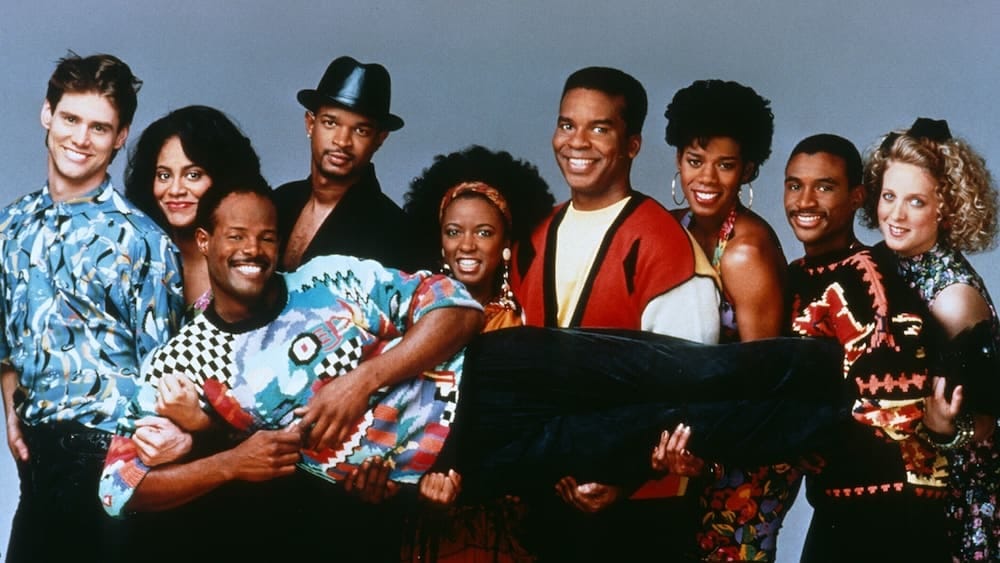
If you’re curious about how the Super Bowl’s halftime show became the entertainment extravaganza that it currently is today, look no further than In Living Color. The Black-led sketch comedy show that was all the rage in 1992, when it offered up an alternative to Super Bowl XXVI’s figure skating-themed program.
In Living Color carried the football theme through its Homeboy Shopping Network and Fire Marshal Bill parodies. But nothing shocked like the Men on Football sketch: playing a flamboyantly gay Siskel and Ebert style culture critic alongside Grier, Damon improvised jokes that amplified damaging sexual rumors about Richard Gere as well as Carl Lewis, slipping past the censors’ five-second delay. (The joke was quickly scrubbed from future versions of the episode.) And while some viewers took offense — “We are angry but not surprised,” Glaad’s Chris Fowler said — the reviews were overwhelmingly positive. “It made me forget how much money my husband was losing [on the game],” one New York woman said in a letter to Syracuse’s Post-Standard newspaper.
But the final ratings were the big headline. Altogether, 22 million people switched from CBS to Fox for the In Living Color alt-cast, outdrawing Winter Magic and cratering ratings for the second half. Washington dominating the game didn’t help.
I can remember watching In Living Color’s halftime show with members of my youth group. We all found it hilarious, though my friend’s mom changed the channel midway through the “Men on Football” sketch. (There were one too many tight end jokes.)
As you might’ve heard, Turning Point USA ran an alternate Super Bowl halftime show in protest of Bad Bunny’s performance during the official halftime show. Garrett Bucks watched both halftime shows, and noticed some very stark differences between the two (headlining artists aside).
I also watched the other halftime show, by the way, the Turning Point USA one with Kid Rock. You all, it was immensely sad. And I don’t mean that in a smug leftist schadenfreude sense. Yes, it was sad in that it was performed on a weird sound stage to a tiny crowd, but I would advise folks who share my politics from taking its scale, alone, as reason for victory. Its aesthetic smallness, I fear, is actually central to the current conservative project. The fact that the left had the massive party with the celebrity cameos helps the MAGA fiction that they are not, in fact, the regime in power, but instead a stalwart group of rebels under siege by a hostile liberal world. We actually gain very little when we call them losers with microscopic crowds and D-list celebrities. In the funhouse mirror of conservative grievance, the mediocrity is the point.
Related: Rick Pidcock comments on American evangelicals’ obsession with celebrity, and the lengths they’ll go to try and make a celebrity like Kid Rock one of their own. “Whether they’re excited about Gary Busey or Nicolas Cage starring in rapture movies, Kanye West or Russell Brand being featured in worship albums or Kid Rock singing about dusty Bibles and Jesus, they have decades of obsession with celebrities supposedly becoming baby Christians and legitimizing their theology on the world stage. And when these examples arise, they often explain away the red flags and eventually end up with egg on their face.”
Also related: After the NFL announced that Bad Bunny would be this year’s halftime performer, Trump criticized the decision and said that he’d be skipping the Super Bowl altogether. One might’ve assumed that, at the very least, he’d tune in to watch Trump supporter Kid Rock’s performance at TPUSA’s halftime show. But Trump and his Mar-a-Lago crowd ended up watching Bad Bunny’s performance anyway.
Numerous artists, including Chappell Roan and Best Coast, are leaving Casey Wasserman’s talent agency after it was revealed he exchanged “sexy” emails with sex trafficker Ghislaine Maxwell.
The mogul’s company, which has a large A-list client roster of artists including Ed Sheeran, Chappell Roan, Coldplay, Imagine Dragons, Kasey Musgraves, Lorde and Pharrell, has been rocked by the DoJ’s rounds of Epstein email document releases, which surfaced Wasserman’s suggestive correspondence with Ghislaine Maxwell in 2003, three years before Epstein was first arrested in Florida on a count of soliciting prostitution.
Those emails have also cast an unfavorable light on the LA28 Olympics committee, where Wasserman serves as the committee head.
Edmund Lee bemoans the current state of Hong Kong cinema, as evidenced by the nominees for 2026 Hong Kong Film Awards.
The current edition of Hong Kong’s most prestigious film event has been shrouded in controversy since the HKFA Association finalised its provisional list of contenders in mid-January, when it became apparent that four prominent local productions had been excluded with no reason given, raising questions about the awards’ integrity.
The February 10 ceremony announcing this year’s nominations proved a non-event for observers waiting for clarification on the unprecedented development. HKFA chairman Derek Yee Tung-sing addressed the harsh reality of the industry — and the use of artificial intelligence in filmmaking — but made no mention of the disqualified titles.
James Van Der Beek, best known for his lead performance in Dawson’s Creek, died this week after being diagnosed with colorectal cancer back in 2023. He was 48 years old.
Born in Connecticut, Van Der Beek got his start acting Off-Broadway while still in high school. He had appeared in several theater productions and a few independent films before his big break came when he was cast in Dawson’s Creek in 1997.
The show’s creator, Kevin Williamson, based Van Der Beek’s filmmaker character on his own experiences growing up. The popular series aired for six seasons on The WB and co-starred Katie Holmes, Joshua Jackson and Michelle Williams. Van Der Beek’s teary response to being dumped by Katie Holmes’ Joey character became a meme that endured long past the show’s end.
Katie Holmes posted a heartfelt tribute to Van Der Beek on Instagram.
Related: Bud Cort, who starred in classic films like Harold and Maude and Brewster McCloud, also died this week after a long illness. He was 77 years old.
Also related: Illustrator Robert Tinney, who used his talents to create the iconic covers to Byte Magazine, died this week at the age of 78. “Tinney became one of the first illustrators to give the abstract world of personal computing a coherent visual language, translating topics like artificial intelligence, networking, and programming into vivid, surrealist-influenced paintings that a generation of computer enthusiasts grew up with.” I was too young to read Byte, but I was never not fascinated by the cover artwork whenever I saw an issue.
Tansy Gardam highlights the magic of physical media and devices.
Yet even with the world of streaming at our fingertips, if offered a DVD shelf we will happily peruse it like in Blockbuster stores of yore, whether it belongs to a friend, parent or a total stranger from Airbnb. The limitations of a finite collection offer more choice than an endless scroll. They’re recommended, not by an algorithm, but by the person who thought these films were worth keeping. Putting on a DVD, or a CD or LP, requires a physical action and stopping or changing it requires another – you have to commit to your choice.
I know it seems silly given the extreme convenience of streaming platforms like Apple Music and Spotify, but I’ve recently rediscovered the pleasure of buying used CDs and creating my own personal music archive that’s not beholden to algorithms or corporate interests.
After months and months of waiting, the official Trump phone has finally been revealed and it’s… well… it’s something, alright.
There are a few things you’ll notice about the T1, but the first thing that may catch your poor, unsuspecting eye is that it looks f**king awful. Yes, it’s gold, as we already knew, but gold in the way that, like, toys you’d get in a Happy Meal are gold, or gold in the way that those little Easter egg chocolates you’d get in a basket as a kid are gold. It’s gold in a way that says, “Look at me, I’m a shiny piece of plastic garbage you want to consume and forget about immediately.”
Sadly, American evangelicals have been divided in their response to the racist video that was posted on Trump’s Truth Social account. (I say “sadly” because this seems like a gimme, like something everyone should have absolutely no problem condemning.)
Initially, the White House defended the video and described the hefty backlash as “fake outrage.” It reversed course and deleted the video Feb. 6, after Republicans and Democrats alike condemned it, stating that an unnamed staffer had mistakenly posted it to the president’s account.
Trump told reporters that he hadn’t seen the full video before it was posted, but condemned the racist depiction in the video. He refused to apologize for it ending up on his account, though, telling reporters, “I didn’t make a mistake.”
Many Christian leaders swiftly condemned the post, while others defended Trump’s actions.
Related: Steven D. Greydanus explains why Trump ought to apologize for the video. “Even if we grant that Trump chose to share this video with his Truth Social readers without watching it to the end and catching the racist coda, a prominent person who shares a one-minute video with millions of people is absolutely morally responsible for ensuring that the content he shares doesn’t include toxic material of this sort.”
From the Blog
Last week, I shared my 50 favorite songs of all time to mark my 50th birthday. This week, I shared my 50 favorite albums of all time.
As with my favorite songs, these are the 50 albums that have stuck with me over the years and decades. Even after all this time, they still feel fresh and inspiring, revealing new insights even after countless listens. They continue to shape and affect me, offering beauty, comfort, rest, faith, and encouragement whenever I need them.
This post is available to everyone (so feel free to share it). However, paying subscribers also get access to exclusives including playlists, podcasts, and sneak previews. If you’d like to receive those exclusives — and support my writing on Opus — then become a paid subscriber today for just $5/month or $50/year.